
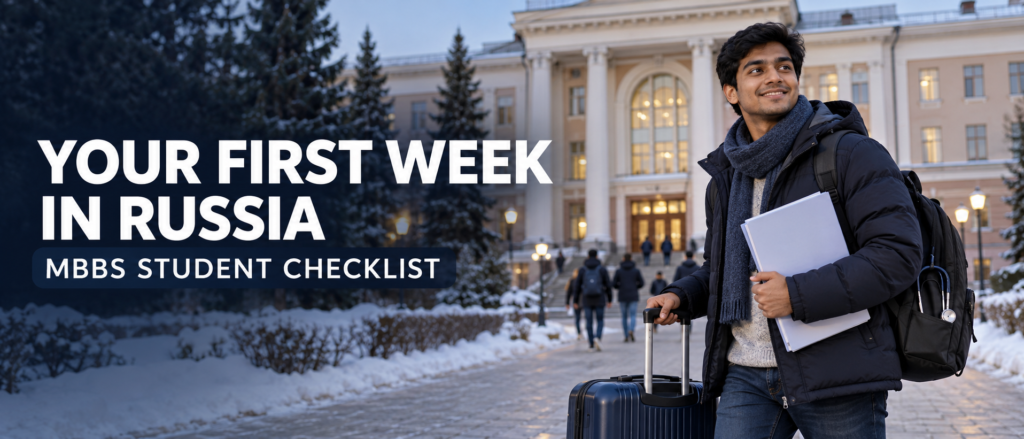



After arriving in Russia for MBBS, contact your university’s international office first. Confirm your accommodation and joining schedule, and ask which migration-registration, medical-check and fingerprinting steps apply to you. Keep your passport, visa, admission papers and key university contacts accessible; follow your university’s current instructions because deadlines can vary.
Your first-hour checklist after arriving in Russia for MBBS
- Keep your passport, student visa, migration card (if issued), admission documents and university contact details in your hand luggage.
- Save digital copies of your passport, visa, admission letter and insurance details in a secure place, and keep a separate emergency contact list.
- Tell your university representative or international office that you have arrived and confirm your transfer and accommodation arrangements.
- Use the address and arrival instructions supplied by your university. If plans change, contact the university before travelling to a different address.
Day 1: Contact your university and check in
Once you reach your accommodation, let the university know you have arrived. Ask which office handles international student support and where you should report in person. Confirm your hostel or residence room, check-in process, meal arrangements, Wi-Fi and the best way to reach campus. Keep receipts and written confirmations for any payments or deposits.
Do not hand your passport to an unofficial agent or leave it as a deposit. If the university needs to inspect or process your documents, ask which office is responsible and when the documents will be returned.
Days 1–3: Ask about migration registration and required procedures
Ask the university’s international office, in writing if possible, what migration registration steps apply to you, who submits them, what documents are required, and the deadline. Do not rely on a general internet post for a personal deadline: the process can depend on your entry documents, accommodation and current rules.
Russia’s official Study in Russia guidance says international students staying for study beyond 90 calendar days generally need a medical examination and fingerprinting/photographing; it currently lists 30 days after entry for the medical examination and 90 days for fingerprinting and photographing. Confirm the latest requirements and appointment arrangements directly with your university, as official rules can change.
Keep copies or receipts for forms you submit. If the university gives you a registration document or other proof of completion, check that your name and passport details are correct and store it safely.
Days 2–4: Sort out health cover, phone and local travel
- Ask the university which medical insurance policy is accepted, what it covers and how to contact the insurer. Keep the policy number and emergency instructions accessible.
- Check whether you need a local SIM card and what identity documents are required to obtain one. Use a reliable provider and protect your account PIN.
- Learn the route between your accommodation and campus using official transport information. Keep the university address written in Russian for taxis or emergencies.
- Ask the university where students should go for routine and urgent medical care. Carry essential prescription medicines in their original packaging and bring relevant prescriptions.
Days 3–5: Complete university joining formalities
Attend the international student orientation and follow the university’s instructions for enrollment, student ID, timetable, library access and communication channels. Ask for the academic calendar, attendance rules, exam format and the name of your academic adviser. If you have not received a timetable, contact the faculty office instead of relying on messages from other students.
Review your admission documents and fee schedule with the university. Keep official receipts for payments and ask the finance office about payment methods, due dates and the account name before transferring money. Avoid cash transfers to personal accounts unless the university has formally confirmed that method.
Days 5–7: Settle into your routine
- Buy only essential items at first and learn where the nearest grocery shop, pharmacy and bank services are.
- Set up a weekly study routine and identify quiet study spaces on campus.
- Join official university communication channels. Be cautious about sharing passport scans, bank details or one-time codes in unofficial student groups.
- Keep your room, passport and valuables secure, and learn the university’s process for reporting a lost document or safety concern.
- Save the Indian Embassy in Moscow’s student guidance page and emergency contact information.
Documents to keep together
Maintain one physical folder and one secure digital folder with your passport and visa copies, admission or enrollment confirmation, migration documents, accommodation details, insurance policy, fee receipts and university contact details. Do not carry every original document around campus; ask the university which originals must be submitted and when you can collect them.
Common first-week mistakes to avoid
- Missing a university appointment because you assumed someone else would notify you.
- Ignoring migration or medical requirements until the end of the semester.
- Paying an unofficial intermediary without a university-issued invoice or receipt.
- Booking travel or changing accommodation without informing the international office.
- Assuming that advice for another city or university applies to your situation.
Frequently asked questions
What should I do first after arriving in Russia as an MBBS student?
Contact your university’s international office, confirm your accommodation check-in, and ask for the exact arrival and migration-registration steps that apply to your case.
Does the university help with registration after arrival?
Many universities guide international students through the required process, but responsibilities and arrangements differ. Confirm who submits each document, the deadline and how you will receive proof of completion.
When do international students need medical checks or fingerprinting?
Official Study in Russia guidance currently describes medical examination and fingerprinting/photographing requirements for many students staying more than 90 days, with separate deadlines after entry. Ask your university to confirm the latest requirements for your visa and arrival date.
Where can I read more about studying medicine in Russia?
Start with our MBBS in Russia country guide and MBBS in Russia eligibility guide, then verify admission and stay requirements with the university and official sources.
Plan your first week with the university
A calm first week begins with clear communication: report your arrival, follow the university’s written checklist, keep copies of completed paperwork and ask questions as soon as something is unclear. For current information, see the Embassy of India in Moscow’s student guidance and official Study in Russia guidance. For help exploring destinations and admissions, visit our MBBS in Russia page.
1229 container
335 container